i fell in love with running my own network services after becoming familiar with linux while i was in high school and discovering the selfhosted and homelab subreddits in college. at the beginning of 2020, due to the trifecta of losing my hearing, dropping out, and the US's inadequate response to the COVID-19 pandemic, i moved back in with my parents and had lots of time to hide in my room and mess around with computers.
during that time i was part of a small friend group on Discord (which honestly saved me from falling into complete loneliness & despair) that i proposed we name "the pasture" and it's stuck with me ever since. i think of myself as a server shepherd; there is a bit of a furry aspect to it, but it feels more like a caretaker role than anything else.
in 2021, i moved into an old house (~100 years old) with 2 other people where i decided i wanted to maintain just enough server infra that i could keep running smoothly and reliably.
home network topology
core hardware (basement)
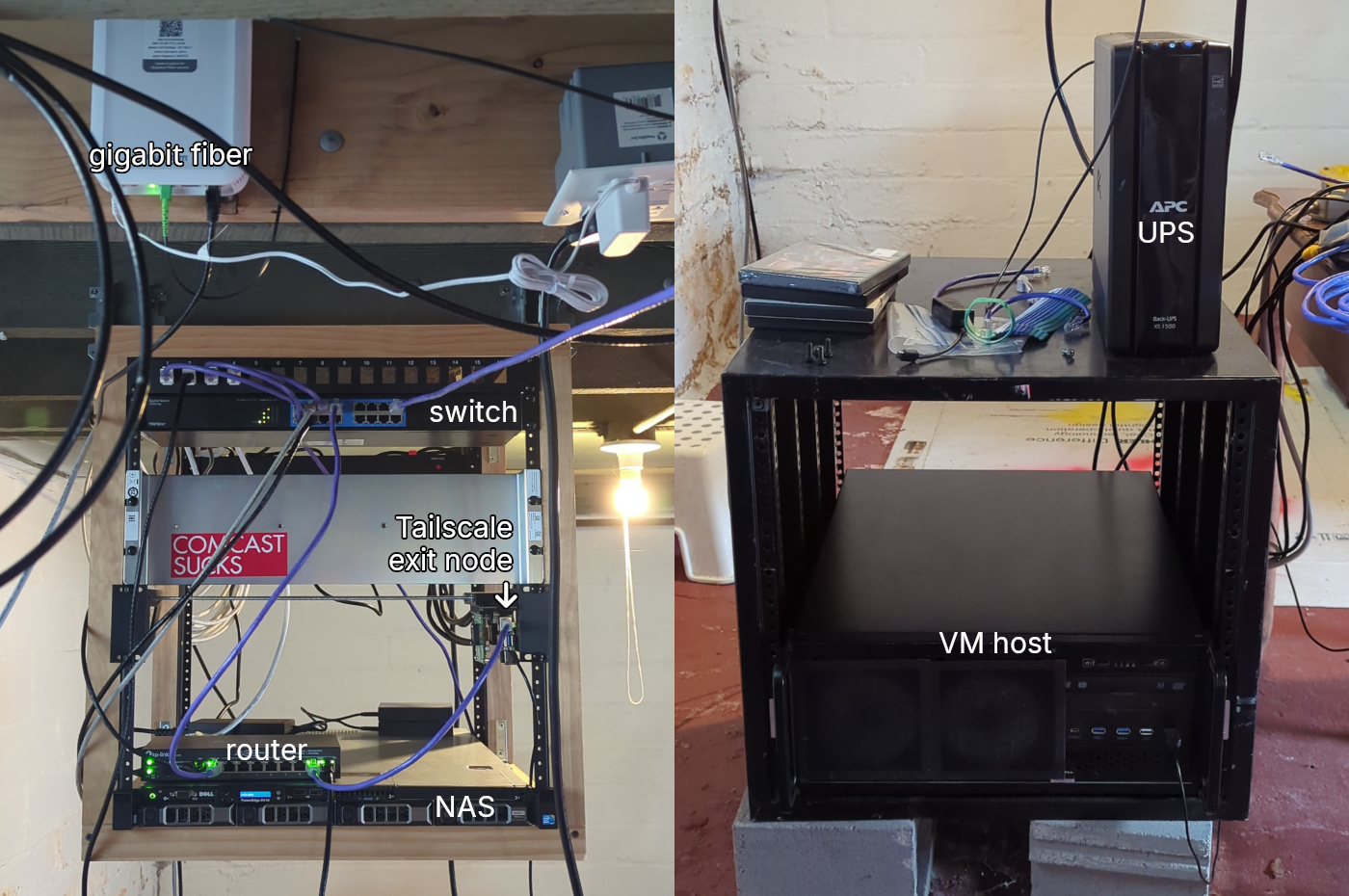
- gigabit fiber uplink
- TP-Link Omada router
- Firewall
- hardware?
- NAS
- Dell Poweredge r410
- 4x 8TB hard drives (2 mirrored pairs for 16TB of usable storage) shared via NFS
- Proxmox VM host
- consumer PC hardware inside a 4U rackmount chassis. it's been upgraded piecemeal over the years, but the most notable upgrade was around 2021 when i used some of my COVID-19 stimulus money to buy new components.
- APC UPS to protect against power outages
it's all on its own circuit breaker because some circuits in the house occasionally get overloaded and trip, so i just wanted to prevent that from happening (and not have to use an extension cord either).
network core
we drilled a few holes in the floors and ran cat6 ethernet cables to the two furnished levels. it's hacky and not everyone can do that depending on their living situation, but we could and it works for us!
the living room on the main floor has a wi-fi AP which is powered over ethernet. 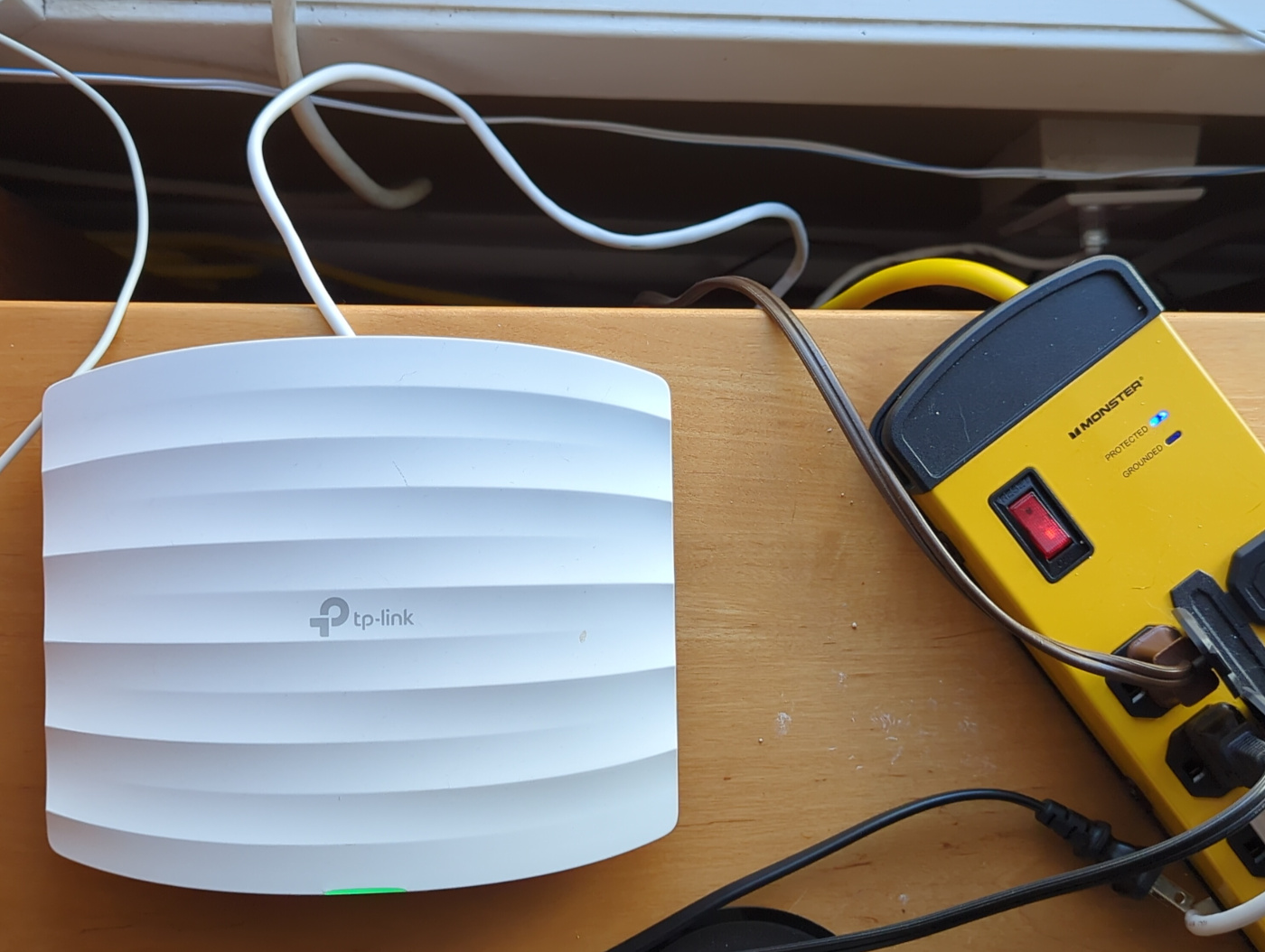
my upstairs bedroom has an ethernet switch and a wi-fi AP next to the door. 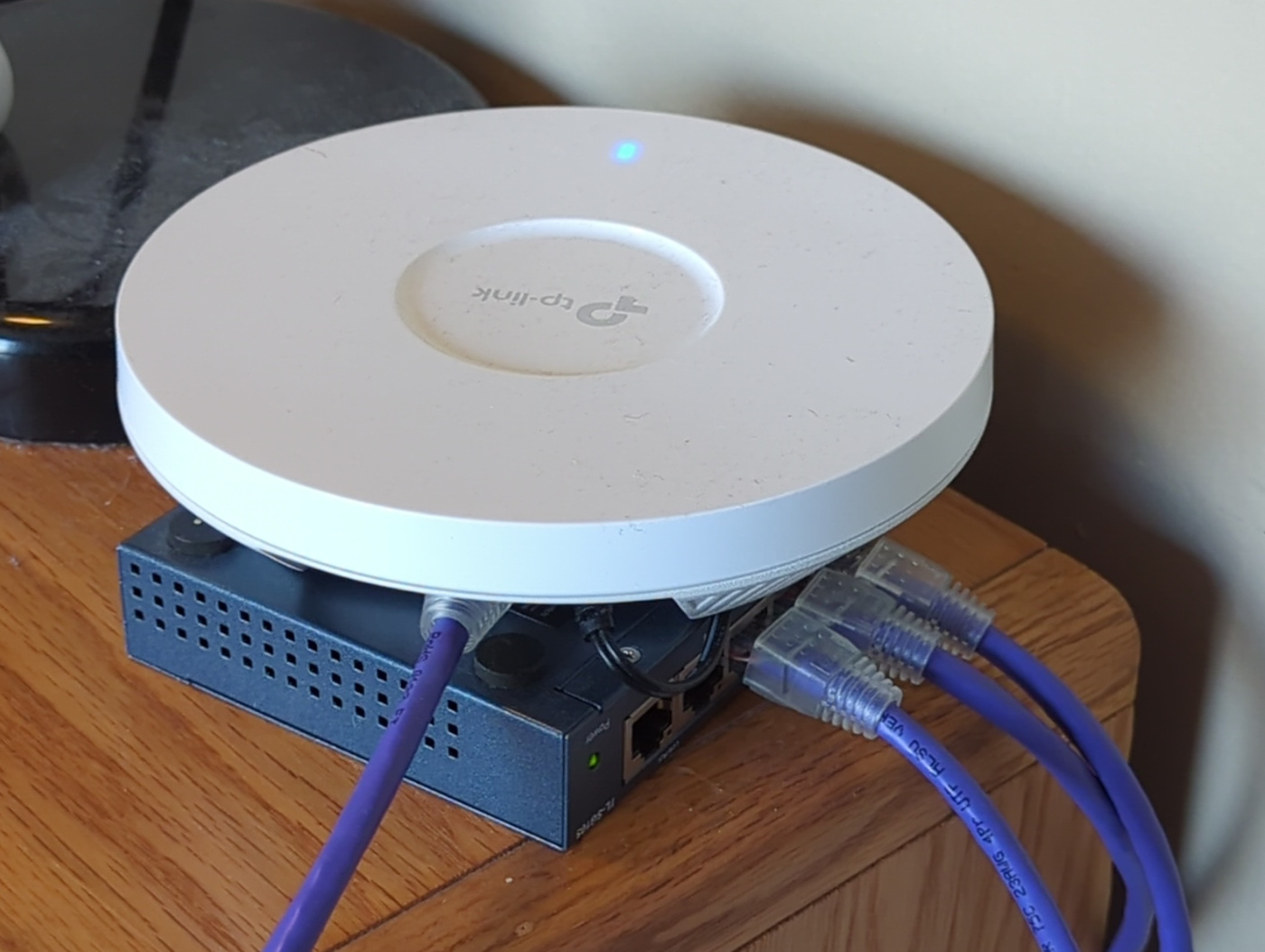
gigabit fiber was an obvious upgrade i decided to take on last year when it first became available to us. it's way better than cable! before that i had been using OPNsense on cheap hardware as a gateway and old routers flashed with OpenWRT as wifi access points. i was unsure whether any of it would get in the way of the higher speeds so i made the choice to buy into a newer integrated ecosystem instead.
servers
having strong network connections on each floor allows me to reliably run server-like software from anywhere in the house.
i'm most familiar with Debian linux and the aptitude package manager because that's what i've spent most of my time learning. i try to install everything natively with apt repositories and systemd integration, but sometimes Docker Compose just ends up being easier or better supported.
Proxmox VMs (rockslide)
derecho- Home Assistant OSflurry- Debian- most of my personal services and PostgreSQL for everything on here that supports it.
spectra- Pop!_OS- an NVIDIA GPU passed through from the host
- Video transcoding
- games, theoretically, but i always run into issues
torrent- Debian- for, well, you know. with a VPN of course. 😜
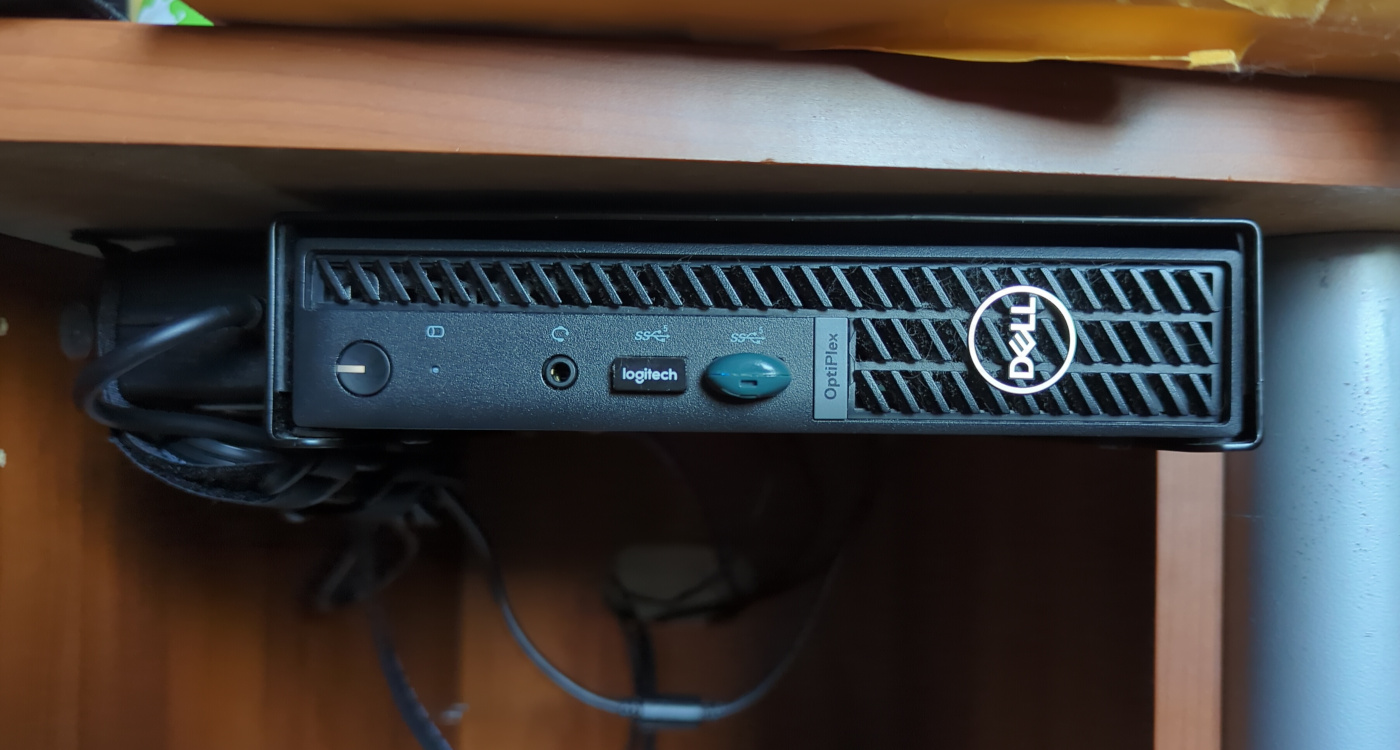
desktop under my desk (asteroid)
it runs NixOS - here's its configuration
- TVHeadend
- there's a TV antenna connected through a USB tuner card.
- recordings are stored on the NAS.
- i've been planning to set up a processing pipeline to remove commercials with Comskip and add them to Jellyfin.
- Zigbee & Z-Wave bridges for Home Assistant
- i have a lot of switches & sensors in my room and i've created automations to help it feel more cozy.
who is this stuff for?
for the household
- Pi-Hole DNS server for blocking ads
- Home Assistant
- Jellyfin
for me
- Bitwarden
- Immich
- Miniflux
- Nextcloud
- ntfy
- SearX
- Syncthing
- dashh for easy access to all of the above
acquiring gear
used hardware bargains
i started with a desktop tower given to me by my middle/high school's sysadmin and after-school computer club organizer. one afternoon he brought out the school's old computers and had us install linux on them; we went with Ubuntu 10.04. they then sat unused for a while in the school's server closet, until a time i was helping organize and saw a stack of them against the wall. i asked about them and he just... gave one to me, which i wasn't expecting. pretty sweet. i used it to run a Minecraft server for a while, and then as an Owncloud server in college. then it lived at Layer Zero running Proxmox for Home Assistant and a few tiny web services, until it finally died and the hard drive was transferred over to a newer computer.
- free from my grandparents when they moved into assisted living:
- their desktop PC - i set it up as a Plex media server for my parents when Netflix still loaned out DVDs you could rip.
- Acer Aspire One netbook - grandpa got it for writing and stopped using it much, now it's my cyberdeck.
- $10 thrift store find: someone's old desktop
- Free Geek Twin Cities:
- short 1U server with custom-picked parts
- Dell Poweredge R410
- APC UPS
pro tip! be careful opening used computers in stores, especially when computers are not their specialty (like a general-purpose thrift shop). they are likely full of dust which can be annoying at best, or at worst could send someone to the hospital over an asthma attack. if the price is low enough for you, consider just buying it and opening it outside or at home. you can then donate it to a used computer store if it doesn't meet your needs, or recycle it responsibly if it ends up being unsalvageable.
identify local services & organizations
- hazardous waste recycling center
- dead hardware should go here instead of a landfill, especially batteries and circuit boards.
- techy shops
- Free Geek is a nonprofit volunteer-run tech refurbisher with four US locations at the time of writing.
- Micro Center
- thrift and surplus stores
- can satisfy other niche hobbies too!
- computer clubs (online and off)
- you can make friends with shared interests who can teach you valuable things, and vice-versa!
- if there isn't already one near you, consider starting one!
some things you might wanna buy new
- UPS batteries
- old and dead batteries are dangerous—they can explode without warning!
- hard drives if you don't want to run the risk of losing precious data.
- you could use older drives to store backups, but remember to test them every once in a while!!
why do i do this?
- it's a way of providing for my household.
- i like being in control of my data and not relying on someone else's cloud.
- i looooove free software. 💕
- it augments my own digital QoL.
- most importantly, i think it's fun!
if i can do it, you can too!
start small. you can learn how to host some of these services on your personal computer, in a VM, or on a cheap VPS. learn how to use server software by experimentation; don't be afraid to start over when you don't like how you set something up! when you're ready to roll things out, look for opportunities to acquire cheap hardware from friends & local thrift stores. then you'll be well on your way to being a server shepherd like me!
